Why a Clear Handoff Keeps Shared Tasks Moving
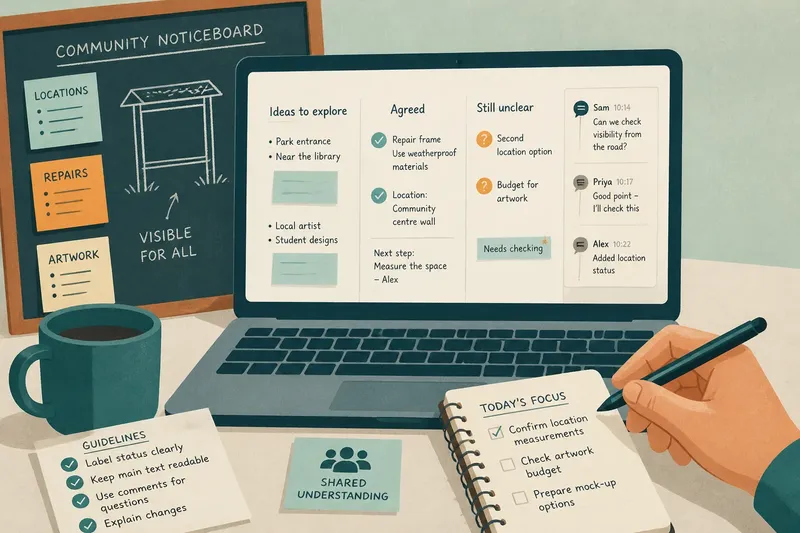
A clear handoff helps shared tasks move without repeated work: name the next owner, record the current state and make the next action unmistakable.

A clear handoff for a shared task answers three questions before the current owner steps away: who takes it next, what state is it in, and what should happen now? Without those details, a colleague may have to reconstruct decisions, repeat work or guess which version to use. A short, specific transfer makes it easier to continue without another meeting.
What belongs in a clear handoff?
Keep the handoff focused on information the next person needs to act. Include the task’s purpose, its current state, the next owner and a concrete next action. Point to the relevant file, message or record rather than expecting someone to search across a whole channel.
The current state should distinguish what is complete from what remains open. “Draft ready for review” is more useful than “nearly finished”. If a decision is pending, name it. If a part has not been checked, say so plainly. That prevents an unfinished item from being mistaken for approved work.
- Next owner: name one person, not a department or group.
- Current state: say what is done and what is still unresolved.
- Next action: use a verb and identify the intended result.
- Working location: link the current file or record.
- Relevant context: note only decisions or constraints that affect the next action.
Say you have prepared a draft reply to a supplier, but a colleague must confirm the delivery wording before it can be sent. A useful handoff would name that colleague, link the draft, state that the wording is unconfirmed and ask them to check it before sending. The expected observable result is a clear decision in the draft or its comments, rather than another person rewriting the reply from scratch.
Who should own the task next?
Name the person who can take the next action, not everyone who might eventually contribute. A shared task can involve several people, but an individual handoff needs a clear receiving owner. Other colleagues can be listed as reviewers or people to consult, without making responsibility ambiguous.
Check that the person has agreed to take it on and can see the relevant materials. If they are unavailable, agree who will cover the work before the original owner disengages. A message sent to a team channel is not the same as an accepted handoff; ask the named person to acknowledge it when the work depends on timely continuation.
Ownership can change as a task moves through stages. The person who gathers input may not be the person who approves a draft or sends it. Name the owner for the next stage, and make any later transfer explicit when it becomes necessary.
How much context should you include?
Give enough context to explain why the next action matters, but do not turn a handoff into a transcript. Include a decision if it affects the work, such as a chosen wording or a requirement to leave a section blank until confirmation. Link to the source where fuller background is kept.
Separate fact from uncertainty. “The client approved the revised heading” reports a decision; “the client will probably approve the layout” is an expectation. If something is uncertain, name the person or source that can resolve it. This helps the new owner avoid treating a guess as an agreed instruction.
Use the team’s normal work space where possible. In Trello, the card description and current attachment can carry the handoff; in Microsoft Teams, a message can point to the relevant SharePoint file. The exact tool matters less than keeping the handoff beside the material people are expected to use.
Where should the handoff live?
Put the handoff where the next owner is most likely to find the task, and make one location authoritative. If a project board tracks ownership, update its owner and status rather than relying on a separate message that can become stale. Use a message to alert the person, then direct them to the current record.
Make the live version easy to identify. Link to the document itself, not a general folder containing several similar drafts. If comments or tracked changes matter, preserve them in the working copy. Avoid copying the same instructions into several places, where later edits may leave conflicting versions.
A good record is brief enough to scan. A compact note such as “Owner: Maya. State: wording drafted; date unconfirmed. Next: check date with the events lead, then update the shared copy” gives the reader a usable route forward. Adapt the format to the team’s tools, but retain the owner, state and action.
What if the task is blocked or unfinished?
Say exactly what prevents progress and what would release the block. “Waiting for feedback” leaves the next owner to investigate. “Waiting for the venue team to confirm the room name; contact them before updating the invitation” identifies both the missing information and a possible next move.
Do not present unfinished work as ready for approval. Mark the incomplete part and explain what has not been checked. If the next owner can make progress on another part, identify that option; if not, state the dependency so they know why the task must pause.
When responsibility itself is uncertain, resolve that before passing the task along. Ask the relevant lead to assign an owner, rather than sending an open request to several people and hoping someone accepts it. The handoff is complete when the receiving person knows what they have taken on and what action they can take.
How can you tell whether a handoff is complete?
A handoff is ready when the recipient can locate the current work, distinguish finished material from open questions, and identify their next action. If they must ask where the file is or whether a draft is final, add the missing detail before the original owner moves on.
For work that could be misread, invite a brief confirmation: ask the recipient to reply with the next action they understand. This is not a request to repeat the whole task. It is a quick way to expose a mismatch, such as one person expecting a review while the other thinks they must send the finished item.
Keep confirmation proportionate. A routine transfer may need only an acknowledgement in the task record. A handoff involving a sensitive decision or several dependencies may need a short conversation. In either case, capture any changed owner or action in the shared record, so the team does not have to rely on memory.
What should you do when the next action changes?
Update the handoff where the team tracks the task, then tell the new owner if the change affects what they are about to do. A change in wording, timing or dependency can make an earlier instruction unsafe to follow, even when the rest of the note remains accurate.
Keep the change specific: identify what is different and which next action replaces the old one. Do not leave both instructions active. If the task has moved to another person, update the owner as well; otherwise, the team may assume the previous owner is still responsible.
Use “clear handoff” as a practical test, not a form to fill in for its own sake. Name the next owner, record the current state and give one unmistakable next action. That small discipline lets shared work continue with fewer avoidable questions and less duplicated effort.